
Top Causes of Metal Failure and How Welding Can Help

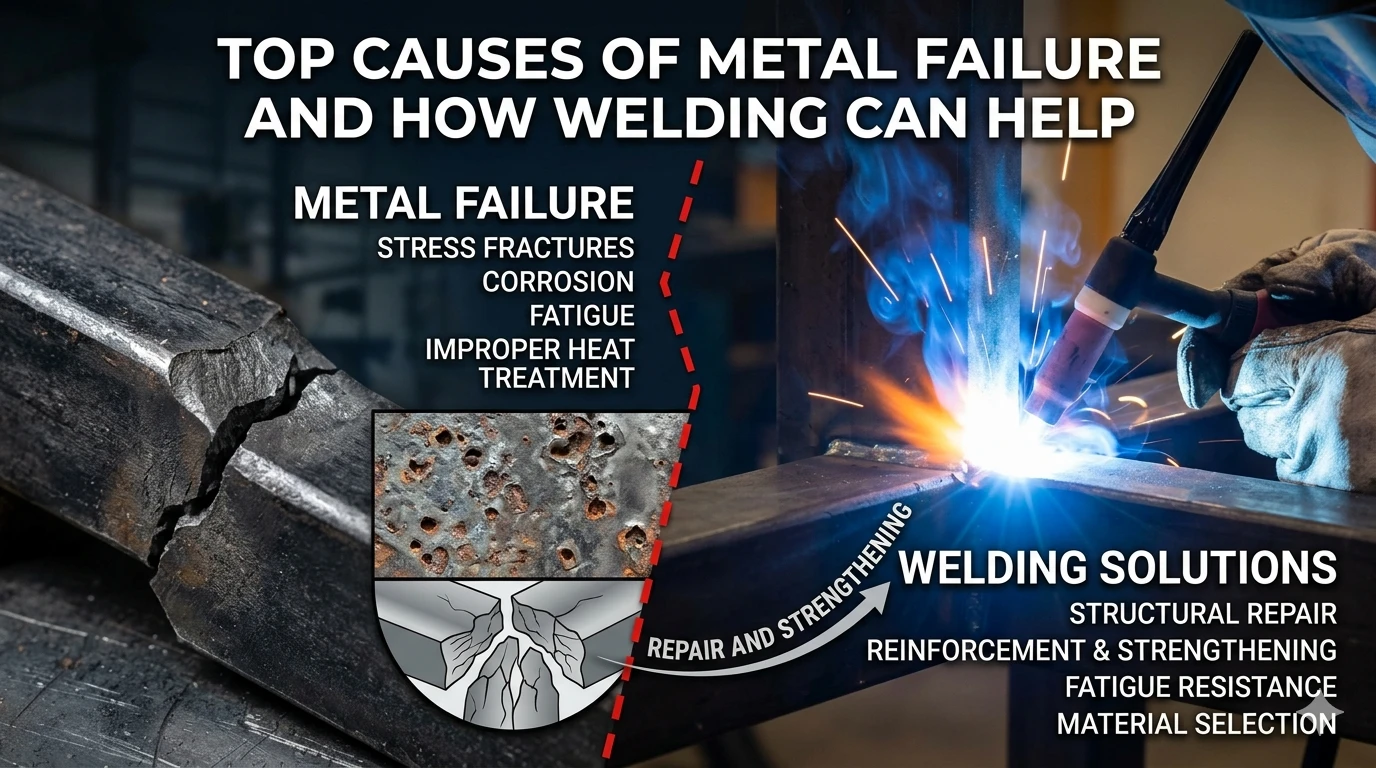
Understanding Metal Failure
Metal failures are a critical concern in various industries, affecting the integrity and safety of structures and components. Understanding the types and mechanisms of metal failure is essential for the effective use of metals in engineering and manufacturing.
One common type of metal failure is fracture, which occurs when the metal ultimately breaks under stress. This can be due to flaws in the material, excessive loads, or sharp notches that concentrate stress. For example, structural beams in buildings can experience fractures if they are improperly designed or if extreme loads exceed their capacity.
Fatigue is another prevalent form of metal failure, which accumulates over time under cyclic loading. A metal can withstand a specific amount of stress, but repeated fluctuations in load can cause tiny cracks to nucleate and grow, leading to catastrophic failure when the material can no longer hold up. Typical examples can be seen in aircraft components which undergo constant pressure changes during flight.
Corrosion compromises the integrity of metals through chemical reactions with environmental factors. Metals, particularly ferrous ones, can oxidize when exposed to moisture or corrosive agents, significantly reducing their strength and durability. An example is the rusting of iron structures, which emphasizes the need for protective coatings to mitigate such failures.
Lastly, wear occurs when metal surfaces interact, leading to material loss. This is particularly common in applications involving friction, such as gears and bearings in machinery. Over time, wear diminishes the functional performance of equipment, making it critical to monitor wear rates and apply appropriate maintenance practices.
In real-world applications, recognizing the different types of metal failure is vital for industries reliant on metal components. It allows engineers to predict potential issues and implement preventive measures, enhancing safety and reliability.
Common Causes of Metal Failure
Metal failure can arise from a multitude of factors that compromise the integrity and performance of metallic structures and components. One of the primary causes is improper material selection, where the chosen metal does not suit the application’s environmental conditions or load requirements. For instance, using a low-strength alloy in a high-stress environment can lead to premature failure. Material properties must be thoroughly evaluated to prevent such scenarios, as improper selection can have catastrophic consequences.
Manufacturing defects also significantly contribute to metal failure. These defects can include issues such as poor welding techniques, inadequate casting, or inconsistencies in metal composition. Statistics indicate that manufacturing defects account for a significant percentage of reported failures in industries such as construction and automotive. For example, inadequate quality control during the manufacturing process can result in weak seams in welded structures, leading to structural integrity issues.
Environmental factors play a crucial role in metal degradation. Conditions like corrosion, elevated temperatures, and exposure to chemicals can accelerate the deterioration of metal components. Corrosion, for instance, is a widespread issue in structures exposed to moisture and salt, which can lead to reduced lifespan and unexpected failures.
Additionally, fatigue loading is another key factor leading to metal failure. Repeated loading and unloading can cause microscopic cracks to develop in materials over time, eventually leading to fracture. This is particularly significant in industries such as aerospace and manufacturing, where dynamic loads are common. Studies have shown that components subjected to cyclical stress can fail at stresses lower than their yield strength if not designed with fatigue considerations in mind.
Finally, poor maintenance practices can exacerbate the deterioration of metallic structures. Regular inspections and timely maintenance are essential to identifying potential issues before they escalate into major failures. Failure to adhere to maintenance schedules can result in the neglect of corrosion control measures or the replacement of worn-out components, which ultimately jeopardizes the safety and effectiveness of metal applications.
The Role of Welding in Preventing Metal Failure
Welding plays a vital role in the prevention of metal failure by providing robust solutions for repairing and reinforcing metallic structures. Through various welding techniques, such as arc welding, MIG (Metal Inert Gas) welding, and TIG (Tungsten Inert Gas) welding, professionals can address a range of issues related to metal fatigue, wear, and structural deficiencies. Each method has its specific applications, strengths, and considerations, allowing for tailored solutions based on the nature of the metal and the intended use of the component.
For instance, MIG welding is often employed for joining thin-gauge metals due to its speed and versatility, making it ideal for fabrication projects that require precision and efficiency. On the other hand, TIG welding is favored for its ability to produce high-quality, clean welds, particularly for stainless steel and non-ferrous materials. By selecting the appropriate welding technique, engineers and technicians can not only repair existing metal structures but also enhance their overall strength and longevity.
Moreover, the application of welding techniques is instrumental in mitigating the causes of metal failure, such as corrosion and fatigue. Proper welding practices contribute to the integrity of the joints and can significantly reduce the risk of catastrophic failures in critical infrastructure. Case studies have demonstrated the successful use of welding in various industries — from automotive to construction — showing how timely interventions can prevent metal failure scenarios and lead to enhanced safety and functionality.
Investing in quality welding equipment and trained personnel is essential for achieving durable welds that withstand the tests of time and environmental stressors. Adequate preparation, adherence to industry standards, and continuous quality assurance are paramount in ensuring that welding practices contribute effectively to the prevention of metal failure and the optimization of metal components.
Best Practices for Welding to Avoid Metal Failure
To minimize the risk of metal failure during welding, adherence to certain best practices is essential. Proper technique plays a pivotal role in ensuring joint integrity and overall performance of welded structures. Starting with material preparation, it is crucial to ensure that surfaces are clean, free from contaminants such as oil, rust, and dirt, which can compromise weld quality. This preparation includes proper edge preparation, ensuring that the metal parts to be joined are fitted accurately to avoid gaps that may lead to defects in the weld.
Conducting thorough pre-welding inspections is another fundamental step. Inspectors should evaluate the materials for compliance with specifications and confirm that they are suitable for the intended application. This process ensures that any potential issues are identified before welding begins, thereby preventing failures that could arise from using unsuitable materials.
During the welding process, maintaining an appropriate welding technique is crucial. Factors such as travel speed, electrode angle, and heat input must be adjusted according to the type of metal being welded and its thickness. Skilled welders are trained to adjust their techniques to accommodate these variations, enhancing the strength and durability of the welded joints.
After welding, post-weld treatments like stress relief, heat treatment, and proper cooling cycles can significantly increase the resilience of metal structures. These treatments help to alleviate residual stresses that may lead to distortion or cracking over time.
Finally, employing quality control measures throughout the welding process cannot be overlooked. Regular monitoring and testing, such as visual inspections or more advanced non-destructive testing (NDT), are essential to ensure the integrity of welds and identify problems as they arise. By prioritizing skilled labor and adhering to established quality control protocols, the likelihood of metal failure in welded structures can be substantially reduced.