
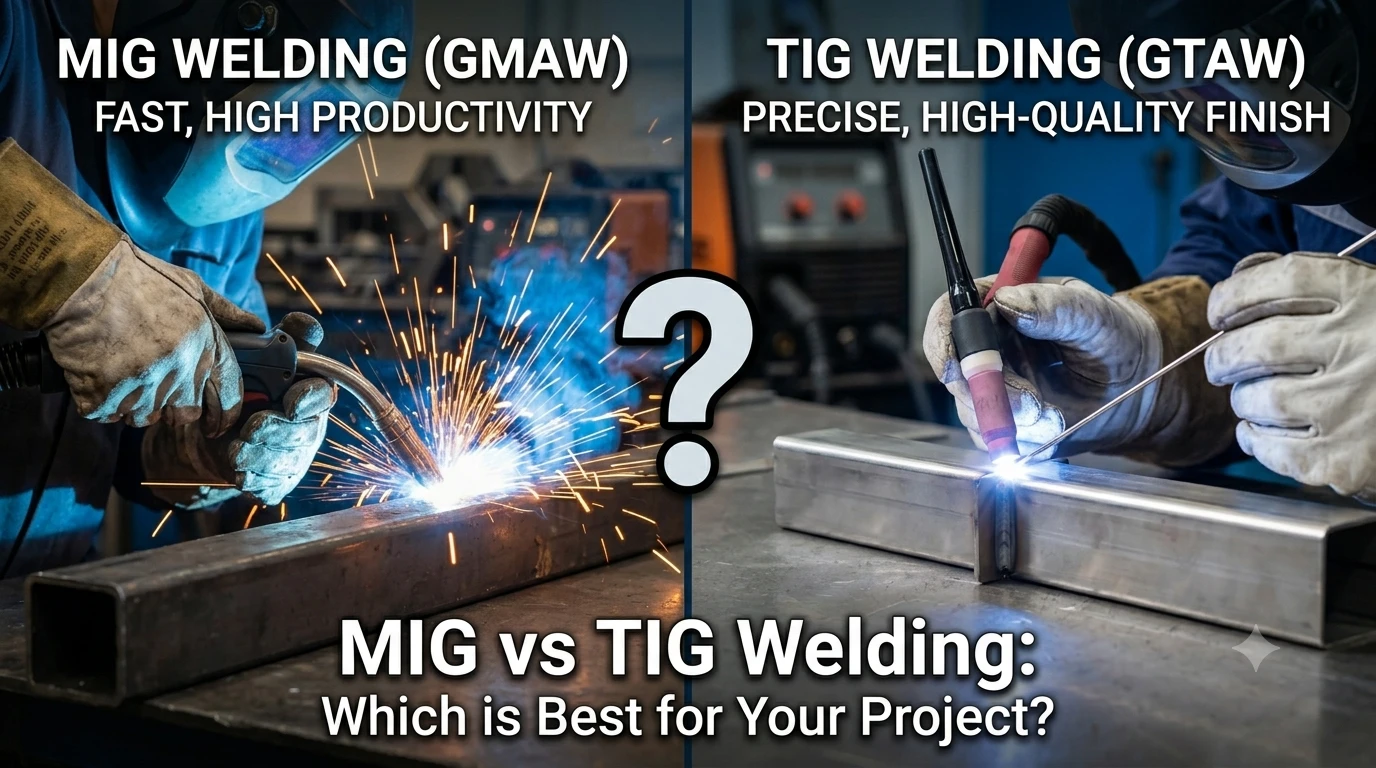
MIG vs TIG Welding: Which is Best for Your Project?

Understanding MIG Welding
MIG welding, or Metal Inert Gas welding, operates on a principle that utilizes a continuous wire electrode to provide filler metal while a shielding gas protects the weld pool from contamination. This process allows for a smooth and consistent weld, making it one of the most preferred methods for both amateur and professional welders alike.
The essential equipment necessary for MIG welding includes a welding machine, a spool of wire, a gas supply, and a welding gun. The welding machine generates the heat needed to melt the base and filler metals, while the wire is fed through the gun and melted to form the joint. The most commonly used shielding gases are Argon and Carbon Dioxide, which help produce cleaner and more stable welds.
MIG welding proves to be highly versatile as it is suitable for a range of materials, including mild steel, aluminum, and stainless steel. Its speed and efficiency make it especially advantageous in industrial settings where time is of the essence. For projects involving varying thicknesses of metal, MIG welding readily adapts, allowing for single-pass welds on thinner materials and multi-pass techniques on thicker sections.
Another significant advantage is the relatively low learning curve associated with MIG welding. Beginners often find it easier to master MIG compared to other welding techniques, such as TIG welding. This accessibility makes MIG an ideal choice for DIY projects, automotive repair, and fabrication work across different industries.
In conclusion, the fundamentals of MIG welding focus on a simple yet effective approach that offers speed, adaptability, and ease of use. Due to its user-friendly nature and applicability in numerous domains, MIG welding remains a prominent choice among welders of varying skill levels.
Exploring TIG Welding
TIG welding, short for Tungsten Inert Gas welding, is a precise welding process that utilizes a non-consumable tungsten electrode to produce the weld. This method is distinguished by its ability to provide superior control, making it particularly suitable for welding thin materials and executing intricate designs. The process involves producing an electric arc between the tungsten electrode and the workpiece, which generates heat sufficient to melt the metals being joined. In most cases, an inert gas, such as argon or helium, is used to shield the weld area from atmospheric contamination.
The tools essential for TIG welding include a TIG torch, which houses the tungsten electrode, a gas supply system for the shielding gas, and a power source capable of delivering a consistent and adjustable current. Knowledge of the parameters, such as amperage and gas flow rates, is crucial for achieving quality welds, especially with delicate work pieces. This versatility allows TIG welding to be employed across various industries, from automotive and aerospace to artistic metal fabrication.
One of the primary benefits of TIG welding is the high quality of the welds produced. The process results in clean, aesthetically pleasing welds with minimal spatter or oxidation, an advantage for projects that demand precision and visual appeal. Additionally, the ability to control the heat input allows for better penetration and reduces the risk of warping, making it ideal for thin materials. However, it is worth noting that TIG welding requires a higher skill level compared to other methods like MIG welding. It is generally more time-consuming and may not be suitable for all applications, particularly those requiring high deposition rates.
Comparative Analysis: MIG vs TIG Welding
MIG (Metal Inert Gas) and TIG (Tungsten Inert Gas) welding are two of the most prominent welding methods used in various industries. Each technique offers unique advantages and disadvantages, making them suitable for different applications based on project requirements.
One of the primary differences lies in the ease of use. MIG welding is widely regarded as user-friendly, making it an excellent choice for beginners. It provides a continuous feed of filler material, allowing for faster welding speeds. Conversely, TIG welding is more complex, requiring a higher skill level due to the need to manually feed the filler rod while simultaneously controlling the arc and heat.
In terms of cooling times, MIG welding generally experiences shorter cooling durations, which can be beneficial in production environments where time efficiency is critical. TIG welding, however, may take longer due to the precision applied in the heating process, contributing to a finer, stronger weld suited for critical applications.
When considering the materials, MIG welding works effectively with thicker metals, such as steel and aluminum, due to its ability to generate higher heat levels. TIG welding shines with thinner materials, including stainless steel and non-ferrous metals, producing clean and aesthetically pleasing welds. The diversity in metal thickness and type makes these processes distinct.
Cost is another factor to keep in mind. MIG welding equipment tends to be more affordable, making it accessible for amateur welders or smaller operations. In contrast, TIG welding requires a higher initial investment due to specialized equipment and the need for added skill development.
Ultimately, the choice between MIG and TIG welding comes down to the specific needs of the project, including the metal type, thickness, and the welder’s experience. Both methods have their merits and can be leveraged to achieve high-quality welds in suitable applications.
Choosing the Right Welding Method for Your Project
When embarking on a welding project, selecting the appropriate technique is crucial for ensuring optimal results. Two of the most common welding methods are Metal Inert Gas (MIG) welding and Tungsten Inert Gas (TIG) welding. Each method has distinct characteristics that cater to various project requirements, such as material type, necessary strength, finish quality, and budget considerations.
First, assess the type of metal you will be working with. MIG welding is often preferred for thicker materials and is highly versatile, making it suitable for steel, stainless steel, and aluminum. Conversely, TIG welding is better suited for thinner materials and allows for precise control, particularly when welding non-ferrous metals like titanium or magnesium. Understanding the metallurgical properties of the materials involved will guide your choice.
Strength requirements also play a pivotal role in the decision-making process. For projects that demand high structural integrity, TIG welding tends to produce stronger, cleaner welds due to its higher level of control and precision. If your project has less stringent strength requirements but prioritizes speed and efficiency, MIG welding might be the better fit.
Finish quality should not be overlooked as well. Projects requiring a clean aesthetic and minimal post-weld cleanup may benefit from the high-quality finish of TIG welding. On the other hand, MIG welding can provide satisfactory results with less emphasis on appearance, especially for structural applications where visual appeal is not critical.
Lastly, consider your budget. MIG welding typically requires less time and can thus lower labor costs, making it more budget-friendly for larger production runs. However, TIG welding often involves higher equipment costs and longer weld times, which may inflate project expenses. Evaluating the financial impact of each method ensures that you choose the welding process that aligns with your project scope.