
How to Prevent Rust on Welded Metal Structures

Understanding Rust and Its Causes
Rust, a common term for the corrosion of iron and its alloys, primarily occurs in environments where moisture and oxygen are present. The chemical process responsible for rusting involves the oxidation of iron, where iron reacts with oxygen in the presence of water to form iron oxides, commonly known as rust (Fe2O3). This process can initiate when even small amounts of moisture and air interact with the metal surface, especially in welded metal structures.
Several factors contribute to the formation of rust on welded metal structures. One key element is the presence of moisture, which can be environmental, such as rain or humidity, or can arise from industrial processes. When moisture accumulates on the surface of welded metal, it acts as a medium for the electrochemical reactions that result in corrosion. The presence of dissolved salts or other contaminants in the water can accelerate the rusting process as they enhance conductivity and facilitate the flow of the electrochemical reactions.
Oxygen also plays a crucial role in the oxidation process. In areas with high oxygen levels, the rate of corrosion increases, leading to faster deterioration of the metal surfaces. Additionally, when different metals are welded together, galvanic corrosion can occur if the metals have different electrochemical potentials, which can further intensify rust formation. This is particularly pertinent in marine environments, where welded metal structures often face both seawater and air exposure, creating optimal conditions for rust.
Specific environmental conditions, such as construction sites that are often exposed to fluctuating temperatures, moisture, and pollutants, can significantly increase the risk of rust development. Identifying and understanding these contributing factors is essential for implementing effective preventative measures against rust on welded metal structures in any industry.
Preventive Measures for Welded Metal Structures
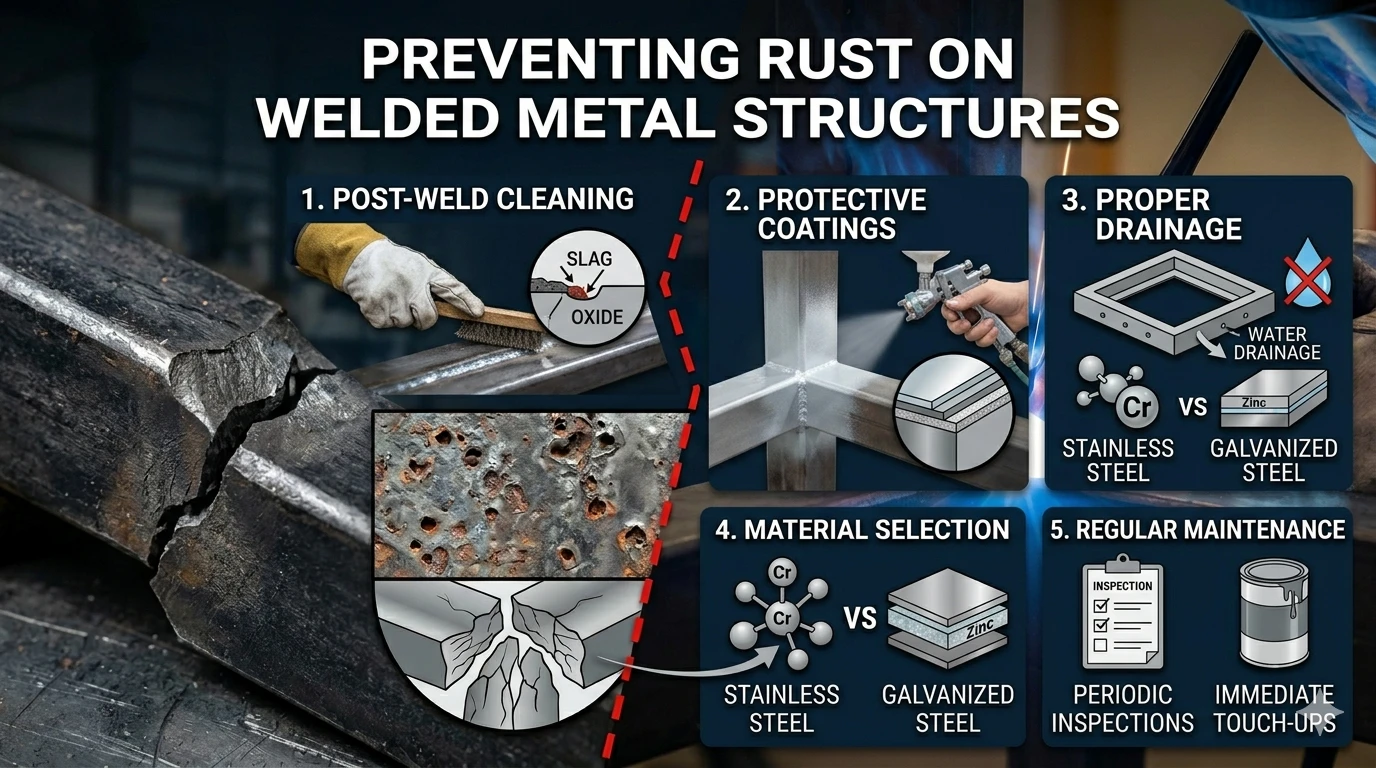
Welded metal structures are vital in numerous applications, but their longevity can be compromised by rust. To prevent this, it is essential to implement various effective strategies and techniques. One of the most significant preventive measures is the application of protective coatings. Paints specifically designed for metal can provide a barrier against moisture and oxygen, both of which are crucial factors in the formation of rust. Using high-quality primers and topcoats can enhance the effectiveness of such protective layers.
Another method of protection is through galvanization, which involves coating the metal with a layer of zinc. This procedure not only offers a robust defense against corrosion but also ensures that even if the zinc layer is scratched, the underlying metal remains protected due to zinc’s sacrificial properties. Galvanization is often utilized in outdoor structures, where exposure to the elements is higher.
Proper surface preparation is a critical step in any protective approach. Before applying coatings, surfaces must be cleaned thoroughly to remove any rust, oil, or dirt. Techniques such as sandblasting or power washing can effectively prepare the surface, ensuring maximum adhesion and longevity of the coating system.
Additionally, environmental controls play a significant role in preventing rust. Structures should be designed and positioned to minimize water accumulation, such as sloping surfaces to encourage runoff. Furthermore, employing correct ventilation in enclosed spaces can help manage humidity levels, reducing the moisture in the air that contributes to rust formation.
Regular maintenance practices are equally important. Inspections should be conducted periodically to identify any wear or damage to protective layers. Prompt repairs of any defects will prevent the onset of rust, ensuring the welded metal structures remain in good condition over time. Incorporating these preventive measures is essential to enhance the durability of welded metal structures and mitigate rust risk.
Regular Inspection and Maintenance Practices
Regular inspection and maintenance are critical components in preventing rust on welded metal structures. By conducting routine checks, one can identify early signs of corrosion, which can save significant time and resources, and maintain the integrity of the structure. Inspections should ideally be carried out at least twice a year, although structures exposed to harsh environmental conditions might require more frequent evaluations.
During these inspections, one should pay particular attention to areas where moisture tends to accumulate, such as joints, seams, and weld points, as these are susceptible to rusting. Look for signs of discoloration, flaking paint, or blistering surfaces, all of which may indicate underlying rust problems. Additionally, check for any physical damages such as scratches or dents that expose bare metal. Addressing these issues promptly can prevent further corrosion from developing.
In terms of maintenance practices, it is advisable to clean the surfaces of welded metal structures regularly. Use methods such as pressure washing or gentle scrubbing with suitable non-corrosive cleaning agents to remove dirt, debris, and other contaminants that can absorb moisture. After cleaning, it’s beneficial to apply a protective coating, such as rust-inhibiting paint or sealants, to create a barrier against moisture and oxygen, the primary culprits of rusting.
While regular inspections and basic maintenance practices are essential, professional assessments can be invaluable, especially for larger structures or equipment. Professionals possess expert knowledge and advanced tools to conduct thorough evaluations, ensuring all potential rust issues are identified, diagnosed, and rectified efficiently. This not only helps in prolonging the lifespan of the metal structures but also enhances safety, ensuring that they meet relevant standards.
Case Studies and Real-World Examples
In the pursuit of effective rust prevention on welded metal structures, several industries have adopted successful strategies that serve as valuable case studies. One notable example is a large construction company that specialized in high-rise buildings. This company incorporated systematic corrosion management practices by applying zinc-rich primers to all welded joints and exposing them to harsh environmental conditions. After a detailed monitoring period of five years, it was reported that the protected structures exhibited significantly reduced signs of rust compared to project sites that did not implement such protective measures.
In the manufacturing sector, a factory producing steel components chose to employ a combination of powder coating and rust inhibitors. The process involved initially sandblasting the welded assemblies to a clean metal surface, followed by the application of a specialized coating designed to withstand weather extremes. Observations over seven years indicated that components maintained their integrity, with minimal degradation attributable to rust. This proactive approach provided the manufacturer not only with cost savings in maintenance but also with improved marketability due to enhanced product reliability.
The marine industry offers yet another compelling case of rust prevention on welded metal structures. A prominent shipping company implemented a rigorous maintenance schedule that included regular inspections and touch-ups of protective coatings. Additionally, they utilized cathodic protection systems to mitigate corrosion on significant marine assets. Analysis of their fleet over a decade demonstrated that vessels with such measures showed drastically reduced incidence of rust-related repairs, extending their operational longevity significantly.
These real-world examples demonstrate that strategic application of rust prevention methods can lead to successful long-term outcomes in various welded metal structures across different industries. By analyzing these case studies, it becomes clear that investment in corrosion management yields substantial returns, safeguarding both the structural integrity and financial viability of projects.