
When to Repair or Replace Metal Equipment: A Comprehensive Guide

Understanding Metal Equipment Lifespan
The lifespan of metal equipment can vary significantly based on several key factors, including the type of metal, the nature of its applications, environmental conditions, and the regularity of maintenance performed. Understanding these elements is crucial for determining when to repair or replace metal equipment. Generally, the lifespan of metal machinery may range from five to several decades, largely dependent on its usage and operating conditions.
For instance, heavy industrial equipment made from high-grade steel is often designed for longevity and may last longer under controlled environments than lighter equipment made from aluminum. In contrast, metal used in harsh conditions, such as outdoors in corrosive environments, tends to decline more rapidly. Therefore, assessing the specific operational context of the equipment is essential for accurate lifespan predictions.
Regular maintenance plays an indispensable role in extending the effective life of metal equipment. Routine inspections for wear, rust, or corrosion can reveal significant issues before they lead to major failures. Key performance indicators to monitor include unusual wear patterns that may indicate misalignment, signs of rust which signal corrosion, and overall operational efficiency. If equipment begins to experience frequent breakdowns or diminished performance, this can be indicative of impending failure.
To assess the condition of metal machinery adequately, operators should implement a systematic approach. This includes collecting data on operational hours, monitoring wear and tear meticulously, and setting benchmarks for performance. These measures can help users make informed decisions regarding repairs or replacements while ultimately ensuring safer and more efficient operation of the metal equipment.
Assessing Damage and Wear
To maintain the longevity of metal equipment, it is crucial to conduct regular assessments to identify potential damage or wear that may necessitate repair or replacement. This process begins with inspecting visible signs of deterioration, such as cracks, dents, or surface rust. These indicators often suggest that the equipment is under stress and may compromise its overall performance.
Types of wear associated with metal equipment include fatigue, corrosion, and abrasion. Fatigue occurs when metal is subjected to repeated stress over time, leading to micro-cracks that can propagate under continued use. Corrosion is particularly prevalent in environments with high humidity or exposure to chemicals; it is characterized by rust or pitting, which not only diminishes aesthetic value but can significantly weaken metal integrity. Abrasion results from friction and can gradually remove material from surfaces, impacting functionality and operational efficiency.
To evaluate the severity of these issues, it is essential to determine the extent of the damage. This can be accomplished by using tools such as ultrasonic thickness gauges, which measure material thickness and detect internal flaws, or visual inspection tools like magnifying glasses to identify minor cracks. Regular inspections are recommended at intervals specific to the operating conditions of the equipment; for example, heavily used or exposed equipment should be assessed more frequently, whereas lesser-used items may be inspected semi-annually.
By conducting thorough assessments using the right tools, individuals can make informed decisions regarding whether to repair or replace their metal equipment. Identifying early signs of wear not only enhances safety and efficiency but also helps in planning budgeting for maintenance or replacement in a timely manner. Regular attention to these factors forms an essential part of maintenance strategy that ensures optimal functioning of metal equipment over its lifecycle.
Cost Analysis: Repair Vs. Replacement
When managing metal equipment, understanding the financial implications of repairs versus replacements is crucial. The decision ultimately hinges on not only the immediate costs but also the long-term impacts on operations and productivity. An effective cost-benefit analysis considers various factors that influence this financial decision.
The initial expense of repairing equipment often appears less daunting than replacing it entirely. However, repairs can accumulate hidden costs that may not be immediately apparent. For instance, while parts may be less expensive than an entirely new unit, the labor required can inflate the overall cost. Additionally, if frequent repairs are necessary, the cumulative expense may rival or exceed that of investing in new equipment.
Equipment downtime is another significant factor. When equipment is out of service for repairs, production may stall, leading to loss of revenue. In contrast, replacing aging equipment tends to provide enhanced reliability and efficiency, which can reduce potential downtime in the long run. Businesses should calculate not only the direct cost of repairs but also the potential losses incurred during periods of non-functionality.
Real-life scenarios can provide valuable insight into this decision-making process. For example, a construction company with aging machinery might initially opt for repairs to save costs. However, if the machinery requires frequent maintenance, the resultant losses in productivity and increased operational costs could suggest that a replacement may have been the more economical choice. Evaluating the cost per hour of operating aging equipment against the cost of new machinery can yield significant clarity on this issue.
In summary, the decision to repair or replace metal equipment is multifaceted and requires a thorough cost analysis. By factoring in immediate costs, hidden expenses, and the potential for downtime, businesses can make informed choices that align with their financial objectives and operational needs.
Making the Final Decision
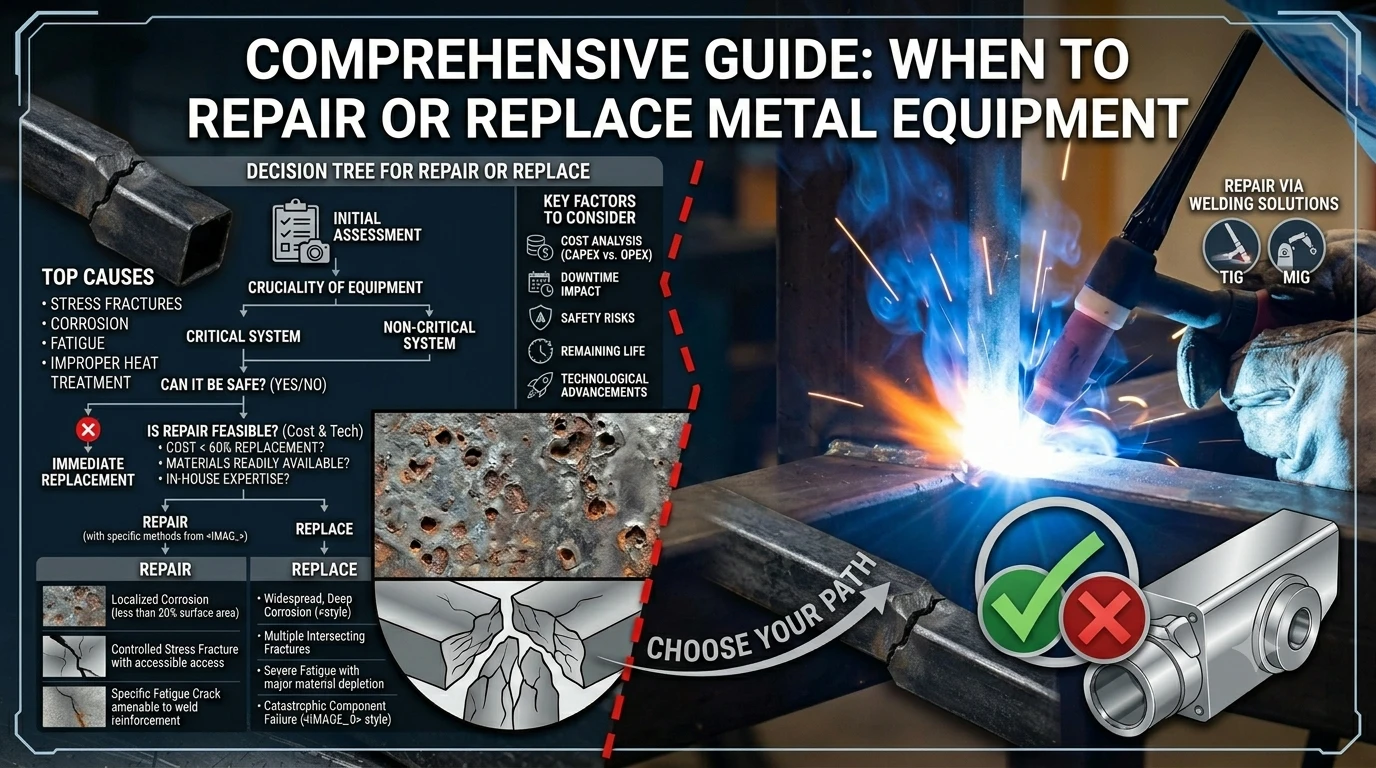
When faced with the dilemma of whether to repair or replace metal equipment, it is essential to take a structured approach that integrates all relevant factors. The first step is to accurately assess the condition of the equipment, focusing on its overall lifespan and the extent of the damage. Equipment lifespan varies greatly depending on its type, usage, and maintenance history; therefore, a careful evaluation helps establish whether the remaining useful life justifies repair expenses.
Following the initial assessment, consider a detailed cost analysis. This involves not only the direct costs of repairing the equipment but also any indirect costs such as potential downtime, reduced efficiency, and impacts on productivity. Compare the repair costs to the current market prices for replacement equipment. There may be instances where the cost of repair approaches or exceeds the value of a new machine, making replacement the more economically viable option.
In some cases, consulting with a professional can provide valuable insights. Experts can help gauge the reliability of repairs versus replacement options, along with providing assessment on the technology enhancements available in newer models. Moreover, professionals can aid in projecting future needs and demands that could influence your decision. Factors such as shifts in production capacity or changes in operational requirements may necessitate a reassessment of equipment strategy.
Finally, it is advisable to plan for future equipment needs. Integrating a long-term perspective can help in making a more informed decision. This could mean considering equipment scalability or the flexibility of newer models to adapt to evolving business requirements. By carefully weighing all these factors, individuals and organizations can arrive at a well-informed decision that aligns with both current needs and future goals.